
Honor Our Heritage by Protecting Our Health: My Story

This May, as we celebrate Asian American and Pacific Islander (AAPI) Heritage Month (and Mother’s Day!), we reflect on the vibrant traditions, resilience, and family bonds that define us. At Miles for Moms, we know that moms are often the keepers of this heritage—the ones who pass down the stories, the recipes, and the values.
I am deeply proud of my roots. My parents moved from Taiwan to the U.S. in the 80s, bringing with them the rich culture and history of their island home. If you’ve never been to Taiwan, it’s a stunning place off the coast of China with a culinary scene that is truly second to none. I have so many fond memories of spending my childhood summers there, and I’m always eager to share the beauty of my heritage.
But this month, I want to talk about a different kind of legacy: the legacy of health and self-care.
For a long time, I viewed my heritage as a shield. I thought our community was somehow naturally protected from certain health crises. Then, last year at 32 years old, my world changed. I was diagnosed with breast cancer—young, active, and completely caught off guard.
My diagnosis was a stark reminder that while our heritage is a source of strength, it doesn’t make us invincible. To honor our history, we must also protect our future.
The Reality Behind the Traditions
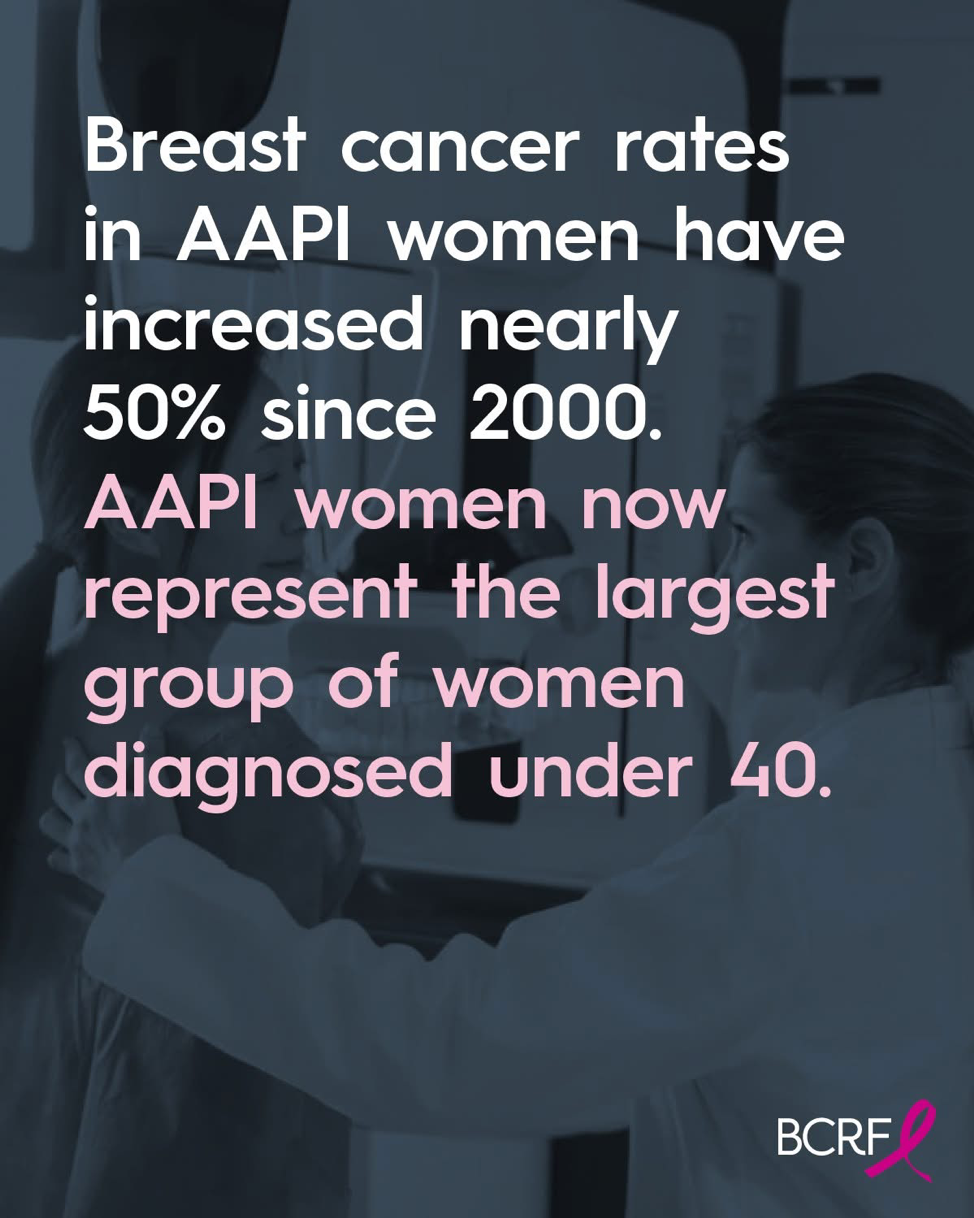
While we celebrate our community this month, we also have to face some sobering facts from the Breast Cancer Research Foundation (BCRF). Protecting our AAPI moms, sisters, dads, & brothers (yes, men can get breast cancer too) starts with knowing the truth:
A Growing Trend: While many groups are seeing a plateau in cancer rates, breast cancer incidence among AAPI women has been increasing by about 2% every year.
The Age Factor: My diagnosis at 32 wasn't an anomaly; AAPI women are significantly more likely to face breast cancer at a younger age than other ethnic groups.
The Screening Gap: Despite our cultural emphasis on family care, AAPI women have some of the lowest rates of up-to-date mammography. Cultural barriers and the "silent" nature of health in many of our households often lead to delayed care.
Unique Biology: Many Asian women have dense breast tissue, which can act as a camouflage for tumors on standard mammograms. I learned firsthand that we have to be our own fiercest advocates in the exam room.
A New Tradition: Openness
In many of our cultures, there is a tendency to "save face" or keep health struggles private to avoid burdening the family. But I’ve realized that silence is not a gift—it’s a risk.
By speaking out about my journey as a 32-year-old survivor, I hope to start a new tradition this May: the tradition of transparency. When we talk about our health, we give the women we love the "permission" to prioritize their own.
This May, Take the Lead
In honor of AAPI Heritage Month, I’m asking the Miles for Moms community to take three specific actions:
Book the Appointment: If you are over 40, or if you have a family history, schedule your screening today. Don't let another May go by without a check-up.
Ask the Hard Questions: Talk to your doctor about breast density. If you have it, ask for supplemental screenings like ultrasounds that can see what a mammogram might miss.
Break the Silence: Use this month of celebration to have a "health heart-to-heart" with your AAPI friends and family. Share this post to let them know they aren't alone.
Our heritage is built on the strength of our women. Let’s make sure we are here to lead our families for generations to come.
Breast Cancer Screening in AAPI Women
This video provides a concise overview of the specific breast cancer risks and screening challenges faced by Asian American, Native Hawaiian, and Pacific Islander women, reinforcing why advocacy is so important during AAPI Heritage Month.
